Feline Justice: Small Claims Stories
Reviews
Feline Justice: Small Claims Stories succeeds by taking a simple concept and executing it with care. The cat characters are wonderfully distinct, each with personality that shines through their dialogue. The cases are short enough to finish in one sitting but offer enough depth to make each decision feel consequential. The lack of pressure or timers allows players to fully engage with the storytelling. It is a perfect example of how a small, focused game can provide a satisfying and memorable experience without complex mechanics or high production values.
Description
Presiding Over Purr-litical Cases
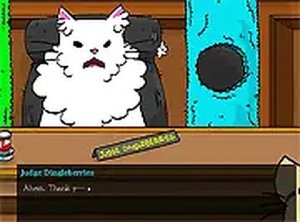
Players take on the role of a magistrate in a lighthearted legal setting where the plaintiffs and defendants are all cats. Each case presents a new conflict, from property disputes over favorite napping spots to disagreements about treat distribution. The game presents testimony through dialogue sequences, and players must weigh each statement against the available evidence. The interface is clean and intuitive, with clear prompts guiding every decision. This structure keeps the focus on the narrative and the characters, rather than complex legal procedures.
Evidence and Testimony Review
During each case, players receive visual evidence displayed on screen, such as photographs or objects relevant to the dispute. The cats provide their accounts through written dialogue, and players can review all information before making a call. The process encourages careful reading and consideration of each character's perspective. There is no timer or pressure, allowing players to take as much time as they need to reach a fair conclusion. The decision-making process feels meaningful because the outcome affects how the story resolves for each character.
Character Personalities and Storytelling
Every cat in the courtroom has a distinct personality, from the overly dramatic tabby to the shy calico. These traits influence how they present their side of the story, adding depth and humor to each case. The writing leans into the absurdity of cats having legal disputes, creating a charming and relaxing atmosphere. Players who enjoy character-driven narratives will find plenty to appreciate in the way each case unfolds. The game avoids heavy themes, focusing instead on lighthearted conflicts that are resolved through thoughtful judgment.
Accessible Design for All Ages
The game is designed to be approachable for players of any age or experience level. There are no complex controls or steep learning curves. Everything is handled through mouse clicks and simple menu selections. The full-screen mode option helps players immerse themselves in the courtroom setting. Because the game runs directly in a desktop browser without downloads, it is easy to start playing immediately. This accessibility makes it a good choice for casual gaming sessions or for introducing younger players to narrative-driven games.
Variety Across Multiple Cases
The game may include several distinct cases, each with its own set of characters and conflicts. This variety keeps the experience fresh, as players encounter new personalities and problems in each session. The outcomes of earlier cases do not appear to carry over, so each dispute can be approached independently. This structure suits players who prefer self-contained stories that can be completed in a single sitting. The combination of consistent mechanics and new narratives provides a satisfying balance of familiarity and novelty.
Compatibility
Faq
Is Feline Justice: Small Claims Stories free to play?
How long does it take to complete one case in Feline Justice?
Does Feline Justice require any prior knowledge of law or courtroom procedures?
Can I replay a case in Feline Justice to see different outcomes?
Is Feline Justice suitable for children?
What platforms support Feline Justice: Small Claims Stories?
Other Similar Games

Beginner Guardian Girl Quest

Chef's Canvas: Pizza Studio

Mech Explorer Jungle Run

Color Grid Cascade

Cloud Drift Balloon Runner
Assist the Lady Puzzle Game
Treasure Champion Journey
Crash Course Dummy 3D

Tower Challenge 3D

Stack Tower Physics Puzzle

Snow Plains Lakota Adventure

Comments
0 comments